Wednesday, September 7, 2011

Top 50 SNES Games: Part 4

Why, hello, nerds. I've been expecting you. This is part 4 of my Top 50 SNES Games countdown/reviews:


#20: Super Mario Kart
1992

The great thing about Super Mario Kart was, you could take away the Mario and the karts, and the game would still be super. Putting weapons and items into a racing game was like adding karaoke to bars: fucking brilliant. With eight different racers, eight different items and twenty different tracks, Mario Kart was easy to learn, hard to master, and extremely addictive. To this day, it's my favorite in the series. For pro racing fans, the one-player mode is the ultimate racing challenge. I didn't beat Special Cup on 150cc until I was twenty-two. I still have nightmares about the original Star Road, a paper-thin course with no rails, ninety-degree turns and seriously pissed-off Thwomps. That's what I think all the subsequent sequels lacked: an addictive challenge. But honestly, the multi-player mode is where it's at. You can play two-player grand prix (which makes it easier to earn trophies) or simply fight each other with items in Battle Mode. My favorite item in the game was always the feather, which gave you a super-high jump. You could use the feather to jump walls or pits (shortcut!) or even go airborne to dodge an incoming red shell! For some retarded reason, the feather was never seen again in any of the many sequels! That's another reason the original Mario Kart is still my fav.


#19: Earthworm Jim 2
1995/96

Oh, EJ. The mere mention of this game gives me the giggles. I can just see the Shiny Entertainment game designers cracking up in their hot-boxed board rooms as they pitched wacky level ideas for this crazy game. Earthworm Jim 1 & 2 on are among the wackiest, funniest, most unconventional games you will ever play. The first game didn’t quite make this list, unfortunately, but EJ2 sure did. The dualogy is about a regular earthworm who gets caught up in an intergalactic adventure when a superpower suit falls to earth and lands right on top of him, turning him into the most unlikely superhero of all time. The zany characters, bizarre levels and absurdist humor put these game in a league all their own. “Groovy!” “Way cool!” “Tender…” These are examples of what EJ says when you pick up items and weapons, including a homing cannon which is appropriately shaped like a house. Most of the levels are standard platformers (and I use the word "standard" very loosely), while other levels are completely bonkers. One level has you rescuing puppies getting thrown out of a second-story window by bouncing them to safety with a giant marshmallow. Another level has you navigating what appears to be the inside of a vagina to the morbid first movement of Beethoven’s Moonlight Sonata. Another level casts you as the contestant on a game show with questions like “What color is Jim’s red gun?” to which the correct answer is “green.” Along the way you’ll encounter unforgettable characters like Peter Puppy, a precious pink pooch… until you piss him off… Snot, your boogery sidekick, Psy-Crow, the villain, Princess What’s-Her-Name?, the damsel in distress, and cows. Lots and lots of cows. I still don’t understand the designers’ strange obsession with them, but it’s that kind of quirky, offbeat humor that makes this game so brilliant, and a must-play for stoners.


#18: Kirby's Dream Course
1994/95

Imagine playing miniature golf, only each hole is filled with fun things like jumps, warps and power-ups. Also, the balls are Kirbies, which you get to smack the shit out of. Kirby's Dream Course is a dreamy combination of a sports game and a strategy game. I immediately fell in love with the one-player mode of this game, and the 2-player is even better. Both modes have you putting on a 3D board, but you'll quickly notice that there isn't a hole. You have to kill all the enemies first, at which point the last enemy standing turns into the hole. There are all sorts of tricks you can pull: jump shots, curve shots, and even obtain classic Kirby power-ups like Ice, which gives you slippery momentum and freezes water; Stone, which stops you instantly and drops you straight downward; and UFO, which lets you fly wherever you want for eight seconds – including right into the hole. On one-player mode, you must complete holes in the fewest strokes possible, which is very puzzle-esque. The 2-player mode has some unique twists. For instance, you compete for the MOST points. You're not penalized for how many strokes you take. Instead, you compete to see who can kill the most enemies (one point each) and who can land in the hole first (two points). But you can also reclaim your opponents' kills by retouching the stars your enemies leave behind. You can even bump into your opponent to steal their powers and knock them off-course, literally. This is easily one of the best head-to-head games ever made, not to mention one of the most original.

#17: Super Mario World
1990/91

This SNES launch title also launched the greatest era in videogame history. It announced to the world that the SNES was indeed superior to the NES -- and it was also lightyears ahead of the Sega Genesis's launch title, Sonic the Hedgehog. SMW was the right game at the right time, showcasing just what the SNES was capable of: it was a massive game full of equally massive levels, with beautiful graphics, smooth controls and a stellar soundtrack. The entire game is full of unforgettable images and music. It's classic 2D Mario with awesome upgrades. Mario can now spin jump and throw items/shells up. The fireflower now turns roasted enemies into coins, while the feather now turns you into a caped superhero (which makes far more sense than a flying raccoon). There aren't many new powers, but this entry did mark the debut of the Yoshies. Part Velociraptor, part frog, the Yoshies come in a variety of colors, and each have their own unique abilities. If you finish a level while still riding Yoshi, you can keep it throughout other levels, although it will wuss out on scary levels like castles or ghost houses. Many levels could be beaten multiple ways, if you could find both the key and the keyhole. Then there's the infamous Top Secret Area, which is simply room full of power-ups you can stock up on (and doesn't even count as a turn when you're switching off levels on 2-player). There’s also a Special Area area full of super-difficult levels, and if you can beat them all, the colors on the world map get all funky, while many enemies take on new appearances. Since I got this game for my eighth birthday, my sister and I have continued an annual tradition of playing through it. We still find it just as enjoyable as ever, although since we've mastered it so thoroughly, we actually have to give each other creative handicaps to keep it challenging. We'll force each other to pull a "Starman," which means beating the level without getting hit, or "Pacifist," which means beating the level without killing any enemies, or, my favorite, "No turning back," which means taping the 'right' button down, so you have to constantly be moving forward and time your jumps perfectly. Most of the time we go far all 96 levels -- such an odd level total. Couldn't they have made just four more? But sometimes we'll try to find the quickest, most direct path to Bowser's Castle (only twelve levels). But no matter how easy this game gets, it will never get old.


#16: Donkey Kong Country
1994

Kool karakters, killer graphiks and a krazy skore are just some of the reasons this game was such a klassik. When crocodiles called the Kremlings steal the banana supply from the Kongs, the apes have to reclaim it. The first thing you'll notice about this game is that the graphics are stunning -- perhaps the best on the console. All the character models were made in 3D before they were rendered into a 2D format. Simply moving and jumping around with the Kongs is a joy to watch. The super-expensive, pre-rendered effects are remarkably fluid, and look kind of like a combination between CGI and stop-motion. The levels themselves are equally impressive, often featuring beautiful background and foreground layers that make the environments feel much larger than they are. You can play the game on 1P, 2P Contest or 2P team. 2P team is where it's at. Player 1 is Donkey Kong; P2 is Diddy, and no matter what mode your'e on, you can switch between Donkey and Diddy on the fly. DK’s a beast, so he can use a ground pound attack as well as kill larger enemies with his jump that Diddy can’t, but Diddy’s faster and can jump higher and further. Surprisingly, this was the only DKC game in which you could actually play as DK, which makes it feel all the more special. Throughout the adventure, you'll meet other members of the Kong krew: the sexy Kandy saves your progress, surfer-dude Funky Kong can fly you anywhere on the island, and old man Cranky gives you helpful hints (and comic relief). If I were a videogame character, I'd be Cranky. I loved how he was always bitching about how younger gamers don't appreciate videogame history. But it isn't all Planet of the Apes. You'll meet other friendly animals who will give you a ride. Rambi the rhino can break through walls with his horn, Enguarde the swordfish is like Rambi but underwater, Espresso the ostrich can flutter and Winky the frog can jump super high. True to the original Donkey Kong arcade game, DKC is also full of barrels, only this time, you get to throw them. You'll need to carefully carry barrels around levels to break into many of the secret bonus rooms. You can tell if you've found the bonus rooms in a level when an exclamation mark appears after the level name on the world map, and it's a great challenge trying to find them all. The game's jungle-jazz soundtrack is reminiscient of The Jungle Book, but even better. DKC is one of the best-looking and sounding games on the console.

#15: Tetris Attack
1996

Since Dr. Mario, there have been endless variations on the whole “match the colors” theme – Wario's Woods, Zoop, Puzzle Bobble, Snood, Yoshi, Yoshi's Cookie, Kirby's Star Stacker, Bejeweled, etc. Frankly, I don't care much for any of these so-called “puzzle games,” which actually test your reflexes more than your problem-solving abilities. However, hidden deep within the pile of Dr. Mario wanabes was a game called Tetris Attack, yet another tired variation on the same theme, BUT hidden deep within the game's many different modes is a mini-game called Puzzle Mode, which is truly one of the greatest puzzle games of all time, up there with Lolo and The Lost Vikings. In Puzzle Mode, you're given a series of brain-teasers in which you must horizontally rearrange blocks to align them with three or more of the same color. There are sixty puzzles.  Each of them give you a designated number of moves to (usually 2-3), and deciphering them is the most fun I've ever had with my clothes on. I guarantee these puzzles will keep you entertained and stumped for hours on end. This game will actually make you smarter! Despite Tetris Attack's disappointing main dish, the overlooked Puzzle Mode is so brilliant that it more than compensates. It's like a pizza joint that actually serves the best french fries in town. It's too bad nobody knows about it. For a taste, check out this Flash remake. It's not as good as the original, but you can play it online if you're not old/cool enough to own a SNES.

#14: Super Mario All-Stars
1993

I'm bending the rules to include this game here, but for good reason. Hell, just look at how highly it ranked! At first glance, it may seem like a meer money-hungry collection of NES rereleases. But upon closer inspection, it’s actually much more. For starters, All-Stars included the formerly Japan-exclusive Mario 2, aptly named the “Lost Levels” here. One can see why it didn't reach our shores before, as it's notoriously difficult. But for those of us who've mastered the original Super Mario Bros., the real Mario 2 was a welcome challenge. Rounding out the rest of the collection are the three classic NES Mario games we all (should) know and love: Super Mario Bros. 1, “2” and 3. But these aren't just ports; these are remakes. And unlike George Lucas's ludicrous changes to the original Star Wars trilogy, the changes Nintendo made to their masterpieces were not detrimental, they're actually (dare I say it?) improvements. Fear not, purists, the gameplay remains untampered with. The changes are mainly aesthetic. Most noticeably, all four games were given 16-bit makeovers, which normally, I would be against. But the visual upgrade neither distracts nor detracts from the gameplay. The artists simply added more detail and color to the existing artwork, and I have to admit, it looks good. Eight to sixteen-bit isn't that big of a difference, though, at least in the art department. The soundtrack, on the other hand, benefited greatly from a 16-bit remix. The SNES had far more layers and a greater variety of “instruments" to choose from. Just check out the underground theme from Mario 1, which now features a rockin' drumbeat and a metallic echo effect. But by far the greatest improvements Nintendo made to these games, and the main reason All-Stars made this list, was in the addition of save features. Back in the day, you had to complete these games in one sitting, and turning the power off on your NES meant losing all your progress. It sucked, especially when playing through the entire Mario 3 without warp whistles. All-Stars fixes this problem by letting you save four files -- per game. I love being able to stop and resume at any point. It's not often – practically unheard of – that an artist's retcons help their art instead of hurting it. This makes Mario All-Stars an anomaly, and it's actually my preferred way of playing the old 8-bit Marios.

#13: The Legend of Zelda: A Link to the Past
1991/92

Third in the series, my second-favorite, and the first great Zelda game, Link to the Past was all about a thief named Ganondorf who finds the legendary lost Triforce, a magical artifact that can grant you any wish. Ganondorf wishes to rule a world of his own, which creates a parallel universe called the Dark World. It's up to a young Lightworlder named Link and a princess named Zelda to find a way into the Dark World and defeat Ganondorf before he and his goons return to lay waste to the Light World. This was the definitive Zelda game. I love how you get the freedom to explore the land of Hyrule, yet your boundaries are always limited until you beat the next dungeon and acquire the new weapon needed to access the next area. It's all very well structured, unlike, say, the original Zelda, in which you could stumble into the third dungeon first, or all these modern open-world games that emphasize quantity of things to do over quality. Many of the classic Zelda weapons are back, like the bow, bombs and boomerang... but many of the now-classic weapons were also introduced in this game, like the hookshot, ocarina, mirror shield, “power gloves” and the fire and ice projectiles. Damn, how does Link carry all that shit? This game also featured some bitchin' items never to be seen again, including the Magic Cape, which turns you ethereal, which is like invincibility plus the ability to pass through solid objects. Once you get the Magic Mirror, you can warp between the Light and Dark Worlds practically wherever you want, except for indoors, which was a brilliant mechanic, and far more convenient than having to return to a single spot every time you need to switch worlds, like in Ocarina of Time or Four Seasons. The game's dungeons are far more complex than ever before, often featuring a super-tricky part toward the end that's guaranteed to stump you for a few minutes, especially that damned Forest Temple or the infamous Ice Temple puzzle. The boss fights are epic. My favorite was the three-headed turtle-dragon of Turtle Rock. Some of the bosses were even recycled in future Zeldas -- that gooey mess of eyeballs reappeared in Majora's Mask, which, by the way, felt very uncomfortable in 3D. Some things just work better in the good ol' fashioned, fixed, top-down perspective. Koji Kondo's soundtrack is spectacular, and introduced many of the classic Zelda tunes. There are so many little things about this game I'll never forget, like that "unreachable room" on the dungeon map of Ganon's Tower, or that strangely modern house silhouetted in the background behind the pyramid that looked just like my house did when I was a kid, which I used to think was amazingly coincidental, especially since its only lighted window correspended with my bedroom. These are just some of the many examples of how much this game means to me personally.

#12: Goof Troop
1993

Goof Troop is like Zelda but with better puzzles, and it's 2-player! Man, when Capcom got the Disney license, they didn't fuck around. They could turn the weakest Disney-fare into the most surprisingly wonderful games, and Goof Troop was their masterpiece. Based off the characters from the mediocre animated television show of the same name, the game features Goofy and his son Max attempting to rescue their friends, PJ and Petey, from a gang of pirates. The game is equal parts action and puzzles. Half the time you'll be defending yourself from enemies, and teamwork during battle is crucial. Like DK and Diddy in DKC, Goofy is stronger, while Max is faster. Neither have any attacks. To kill enemies, you have to find objects like barrels to pick up and throw at them. You also have to ability to catch thrown items, from both enemies and your partner. Like Contra, this game was meant to be played on 2-player. For example, you'll often want Max to fetch distant objects and pass them to Goofy to hurl at enemies, since the Goof can take them out in one throw. You'll also pick up items along the way, like a hookshot to stun enemies, or a bell to lure them into trap. When you're not battling enemies, you'll be solving puzzles. And man, these puzzles are fantastic. They all follow the same basic concept: they all require you to move blocks onto switches, but there's a catch: once a block is kicked, in continues to slide in that direction until it hits something else. Solving these puzzles together with a friend is twice as fun. In fact, I think this is the single greatest two-player co-op game of all time.


#11: Shadowrun
1993

In this slick, noirish, cyberpunk urban-fantasy, you're Jake Armitage, a shadowrunner – one who still dares to walk the streets of a quasi-post-apocalyptic Seattle. The game opens with an assassination attempt on your life. Four gangsters gun Jake down in the middle of an intersection in broad daylight. Afterward, a fox approaches your corpse, morphs into woman, casts a spell on you, and flees. You then wake up in the morgue with amnesia. Your goal: to discover who tried to kill you and why... then get 'em back. There has never been another game like Shadowrun, before or since. Think Grand Theft Auto as a fantasy RPG – and without the cops. It's total anarchy! Venturing outside in this game means entering a warzone of gang territory and sniper fire. The game's warped, twisted version of Seattle is populated with humans as well as fantasy races like elves, vampires and animorphers. Every single area in the city matches the dark, foreboding theme; you'll explore ghettos, alleys, abandoned buildings, towering skyscrapers, sewers, tunnels, cemeteries and a junkyard. You'll acquire a bitchin' arsenal of both firearms and magic on your quest. You'll need to frantically search a new part of town for a street doctor to deactivate a time bomb inside your head. You'll get help from a dog god named H'oochin-ikwa. Shadowrun has several unique gimmicks to it, most notably the keywords system. The game boasts a terrific story, which is actually based off a novel called Never Deal with a Dragon, and solving the murder mystery of who killed you means asking a lot of questions.

Ask about... keywords.

Whenever you speak to another character, you can either “listen” to what they have to say, which often teaches you new keywords, or you can “ask about...” any of the keywords you've collected so far. Some gamers are bound to find the game too difficult due to the fact that it often gives you little direction. You will get stuck in this game, with no idea what to do next to progress the story. You always get a clue, but you have to figure out the rest for yourself. Like, you'll reach a locked door but won't have a key, so you'll have to find another item to force entry with. Or, you'll have a new keyword like The Matrix but you won't know who to ask about it. As a result, you often have to backtrack and ask everyone about a keyword until you find the one who can help you. This is no children's game. It's difficulty and mature themes give it a very adult edge.

Ask about... The Matrix.

Whenever you find a computer in Shadowrun, you (or any other decker in your party) can hack into The Matrix to steal money from bank accounts or download vital information. It's a cool mini-game that involves exploring a maze of invisible firewalls not unlike a Minesweeper board, only you can detect how many walls are nearby you at any time, and even destroy them if your computer skills are high enough, an attribute which you can increase with your karma points. But beware: cyberdeath results in real death. Sound familiar? By the way, this was six years before the Wachowski brothers' film, The Matrix, came out.

Ask about... karma.
Instead of earning experience from killing enemies like in a standard RPG, you're awarded karma points, which you can use to upgrade any of your attributes as you choose. There's Firearm, which increases your aim, Strength, which allows you to carry heavier artillery, Charisma, which allows you to recruit more mercenaries into your party at a time, and more.

Ask about... mercenaries.

Hanging around bars and nightclubs are fellow shadowrunners, and you can hire up to three of them to join you at once. Words cannot describe how thrilling it is to storm enemy turf with an uzi-toting dwarf, an elven decker and and a foxy, animorphing mage. They do all the fighting automatically, but you can also order them to reposition themselves with the cursor during gunfights.
Ask about... the cursor.

Much like a computer game, in order to examine things, interact with people or use weapons/items/spells, you actually have to bring up a cursor, move it across the screen and highlight whatever you want to interact with. I've read many complaints of this mechanic, but it never bothered me. The cursor moves fast, it's easy to use, and it makes combat realistic – in a gunfight, it would actually take a moment to steady your aim on an enemy.
I could go on and on about this game, but I wouldn't dare give any more away. Suffice to say, this is the most criminally overlooked game on the SNES.


Up next: the top ten!

Friday, August 12, 2011

Top 50 SNES Games: Part 3

Oh! Hello, nerds. I didn't hear you come in. This is part 3 of my top fifty Super Nintendo game reviews, #30-21:


#30: Super Bombermam
1993

KERBLAMO! Bomberman + a four-player multi-tap + four guys + Bailey's + Jaimeson + Guiness = an explosive evening. Allow me to explain. Bomberman is one of the best multi-player games ever made, especially if you turn it into a drinking game. My buddies and I love to prepare Irish car-bombs, and every time you win a match, you have to chug one. The SNES only started with two controller ports, but in 1993, the multi-tap came out, which allowed you to play up to four-players, which mainly affected sports games (my least favorite genre), but the tap was worth getting just for Bomberman. The matches are extremely fast-paced, rarely lasting over a minute. It's some of the most frantic, frenetic fun you'll ever have. Players are all thrown into a maze armed only with bombs, and the last man standing wins. Your bombs explode five seconds after laying them, and they also act as walls before they detonate, so mastery of timing, cornering and chain-reactions is key. You can also collect a variety of dynamite power-ups, including a boot (which lets you kick bombs), a glove (which lets you throw bombs), a fireball (which upgrades your explosion's range), remote-detonated bombs, and invisibility! This game's a blast! Apparently, there's even a single-player mode. Who knew?


#29: Mega Man X2
1994/95

There were three Mega Man X games made for the SNES, and you'd better believe all of them made this list. X2 was my least favorite of the three, though that doesn’t mean it wasn’t a kickass game. In the opening sequence, Mega Man and some other maverick-hunter are speeding across a desert on jet-bikes against a wave of enemy lazer-fire. The Mega Man wanabe gets hit and explodes. But does our boy in blue turn back? Fuck no. He accelerates. And just as he closes in on the enemy base, he leaps off the jet-bike as he olleys it into the robot guarding the gate, obliterating the shit out of him. And that's what Mega Man's all about. He's a fucking badass, made even cooler by the fact that he's not even trying to be cool. He doesn't flex, he doesn't smoke, he doesn't womanize, he doesn't wear shades indoors and he doesn't drop cheesy one-liners like most action heroes from the eighties. He's just a genuinely good hero with a talent for ass-kicking. X2 rocked almost as hard as the first X game. It actually had my favorite weapon selection of the X games, including the Magnet Missile, which was remote-controlled, the Speed Burner, which, fully charged, gave you a fiery horizontal boost, and the Crystal Hunter, which froze enemies in an ice cube which you can then use as a platform! Like its predecessor, X2 was full of hidden upgrades that only the cleverest gamers will find. The only thing I didn't like about X2 was the sidequest to reclaim Zero's parts, which involved defeating three secret bosses known as the X-hunters. You'd think that after locating the hidden X-hunters, defeating them and reassembling Zero, you'd get to play as him. But nope. Your only reward is getting to watch him defeat one of the final sub-bosses for you. What a tease.


#28: Mega Man X3
1995/96

Don't you hate it when you start a sequel with none of the many abilities from its predecessor? As usual, Mega Man starts X3 with a minuscule health bar, no upgrades and no special weapons. But this time around, Capcom finally decided to give the fans what they wanted: they let you play as Zero. He starts with a huge health bar, fully-upgraded arm cannon and a devastating lightsaber attack! But there's a catch: if Zero dies only once, he's gone forever, so be careful with him, switch back to his blue brother if he gets weak, and prepare to do some resetting. The funny thing is, Mega Man soon becomes the far superior choice, because X3 had the greatest upgrades in the entire series, including a helmet upgrade that pin-pointed the level’s secrets for you via radar, a leg upgrade that allowed you to dash and/or jump again in midair, and an armor upgrade that allowed you to, while standing still, slowly refill your health AND YOUR SUB TANKS! So, before every boss battle, you can just leave Mega Man sitting there to rejuvenate while you run to the bathroom/kitchen/methlab. Dr. Light kindly warns you that you can only choose one of the ultimate upgrades (damn, Capcom was getting stingy). If you skip the upgrades, a hidden capsule in the fourth Sigma level rewards you with all of them. I cannot describe how powerful and happy these make you. It makes all Mega Man's previous incarnations look like scrap metal. Aside from the ultimate upgrades, you can also acquire four mechs to ride around in and some cool special weapons. My favs: the Spinning Blade, which were close-range yet powerful, the Ray Splasher, which sprayed fire like an out-of-control fire hose, and the Tiger Fang, which could drill through anything, including cracked walls. As far as the X series goes, this should have been the last. X4-6, on the Playstation, are better left unmentioned. Capcom should have called X2 and X3 “Mega Man Y” and “Z.” I still recommend picking up the Mega Man X Collection, available for a variety of consoles, if only for the first three.


#27: The Lost Vikings
1992

Lost Vikings was the best action-puzzle game since the Lolo series (my two favorite games on the NES). The evil Tomator is a time-traveling alien who starts abducting Earth's inhabitants from a variety of time periods for an intergalactic museum/zoo to show off Earth's history. Everything goes fine until he abducts three vikings who decide to break out of their “habitat” and fight back. You get to control all three of these vikings and they all have their own unique abilities, which means you'll frequently switching back and forth between them to solve puzzles and defeat enemies in order to gude the entire trio safely to the level's exit. Erik the Swift can run, break through walls with his helmet, and is also the only character who can jump. Baleog the Fierce has the weapons -- a sword and a bow 'n arrow. Olaf the Stout has a shield which he can use for protection as well as hang-gliding. The vikes must fight their way through all the different sections of Tomator's spaceship "zooseum": prehistoric times, ancient Egypt, a futuristic factory and the wildly weird Wacky World (perhaps the sixties?). The game's most charming feature was the Vikes' witty batter, which provided great comic relief between levels or whenever you fail a level. You can play it with one or two players, but not three, which is a good thing. It's hard to explain why without doubling the length of this review, so just trust me. Personally, I preferred to play the whole game on one-player. Probably because I don't have any friends... I mean, uh, friends who will play the game with me.

#26: The Lost Vikings II
a.k.a. Norse by Norsewest
1994

Interplay did the unthinkable by actually topping the first game. The three Vikes are back, but this time, each of them have new abilities in addition to their old ones: Erik the Swift now has a new helmet which allows him to breathe underwater and rocket boots which give him a second jump. Baleog the Fierce has a grappling hook that doubles as a mid-range weapon. Olaf the Stout can now shrink to fit through narrow passages and fart, which destroys things below him as well as gives him a boost of air while hang-gliding. There are also two NEW characters: Fang, a werewolf who can use his claws to shred enemies or climb walls, and Scorch, a dragon who can breathe fire and fly! Only three of the five characters are playable at once avoid becoming overcomplicated, and the game always gives you the three you need to complete the level. The quirky quintet journeys through the countryside of Gothic Transylvania, medieval castles in the dark ages, pirate ships in the middle ages, ancient temples in the Amazon jungle, and a post-apocalyptic future that looks straight out of a James Cameron film. The action, puzzles and humor are all better than the first. It's also much harder than the first game. You will end up retrying many of the levels many times, but it's sooooo worth it. The more Game Overs you get, the more the vikings make fun of you, and the jokes just keep getting funnier and funnier. Go to Valhalla fifteen times and Thor himself chastizes you. It's not often that a game rewards you for failing, and it's touches like that that make the Lost Viking dualogy so wonderful.


#25: Super Metroid
1994

Samus Aran = the greatest bounty hunter of all time. Eat your heart out, Boba. Like Zelda III, Metroid III was the definitive game of the series, and completely negated the need to ever play its predecessors again. It’s one of the most unforgettable gaming experiences you will ever have. It’s a thrilling, epic, atmospheric game that really makes you feel. Anyone who’s played it knows what I’m talking about. Some games have such imaginative settings, you never forget what it feels like to be there, like Planet Zebes, a dark, unpleasant, cavernous hellhole where Samus is sent to recover the last living species of alien larva, the Metroid. Unfortunately, the planet is infested with hostile lifeforms. So basically you’re an exterminator, eradicating an entire planet as you attempt to find the last Metroid. Unlike most platformers which feature a series of linear levels, Metroid is one ginormous, open level. Like Zelda, the game is meticulously structured to limit your progress until you acquire the necessary power-ups. Ah, the power-ups. Super Metroid is full of them, and they're all fucking awesome. Morph ball, bouncy ball, ice beam, grappling hook, screw attack... the game just keeps getting better and better. And as complex as the underworld of Zebes is, it never gets overwhelming. You will get to know the planet like you're own home. It's divided into distinct sections, like an underwater area and a lava area, and you get hella helpful maps that tell you where you’ve been and where you haven’t. I loved getting all the blue squares pink! Metroid gave birth to the popular term "speedruns," where players competed to complete a game as quickly and efficiently as possible. The quicker you beat the game, the less Samus was wearing in the game's ending. Players that beat the game in under three hours got to see her in her undies! That's as slutty as she gets -- believe me, I tried. The controls are excellent: jumping and wall kicking are very precise, you can shoot in 8 different directions, you can even pull an Michael Jackson moonwalk! The music’s very dark and ambient, it really immerses you in the environments. Super Metroid also had some amazing boss battles, like Ridley, a metallic dragon, Mother Brain, the final boss, and my favorite, Kraid, a boss so Godzillian it can't even fit on the damn screen.


#24: Contra III: The Alien Wars
1992

This is my go-to game for a quick adrenaline fix. It's easily my favorite entry in the series, at least on one-player. As much as I loved the 3D Mode 7 levels on one-player, I can't say I cared much for playing it on splitscreen with a partner. Contra games were always awesome, but this one cranked the badassery to the max. It makes you feel like the star of a big-budget action film, throwing you into one classic action set piece after another. You'll jump through the fiery rubble of a freshly nuked city, duel a robotic spider while climbing the side of a skyscraper, and leap from a motorcycle to a helicopter -- then jump between airborn missiles as they fly toward the enemy base. Ridiculous? Yes. Ridiculously awesome! And for the first time, you don't have to enter the Konami code to make the game possible. See, all the previous Contras were unbelievably difficult on the default difficulty, and only by entering a famous button sequence on the title screen would you get enough lives to make the games possible (and enjoyable). But in Contra III, you can simply go into options and change the difficulty, or even increase the amount of extra lives you get per continue. I loved all the new features in Contra III: You could climb on walls and even monkeybar across ceilings, carry two weapons at once, lock your mobility so you can fire in any direction without moving, and get bombs that destroy everything onscreen. This game is like a mental trip to the gym; it will turn you from Jigglypuff to Duke Nukem, at least in your head.


#23: Mega Man 7
1995

Between X2 and X3, Capcom made Mega Man 7, a continuation of the original series. MM7 had a strikingly different style from either series, which is the only reason I can think of as to why the game is so underrated. The look of the game was neither as familiar as the old 8-bit games nor as badass as the X games. But don't let the colorful, bubbly appearance fool you. This game kicks major ass. It was great to see all the old faces return, and get a 16-bit take on the classic formula. As usual, Wiley has eight bosses for you to defeat, only this time, you only get four at a time, which I really liked. It narrowed down the trial and error period of trying to find out boss weaknesses. I normally abhor using the internet for help on games, especially on your first play-through. However, I do make an exception for Mega Man games, for which I always look up a cheatsheet for the boss weaknesses, just so I can play the levels in the right order. I don't have time for all that guess-and-check bullshit. MM7's greatest strength was its amazing level design. The stages really complimented their end bosses (for example, Spring Man’s stage is full of bouncy coil springs), and the bosses were some of the best villains in the series. My favorites were Shade Man, a vampiric robot who could actually drain your energy, and Slash Man, who was like X-Men's Wolverine on speed. I loved how the weapons could also affect the environment. Thunder Bolt could activate machinery in the background, Scorch Wheel could burn flammable objects, and Freeze Cracker could turn things to ice. MM7 also marked the debut of “the shop.” Between levels, you could visit Auto to purchase helpful items like Beat, a robot-bird who could air-lift you from pits if you fall into them. Each level also boasted brilliant secrets. Smart players will be rewarded with awesome items like Protoman’s shield and a jetpack! This is probably the most underrated game on the SNES. Though hated by many, I actually think it's the best of the original series. *flinch!*

#22: Disney’s Aladdin
1993

Alternate lyrics to “Friend like Me:”


Well, when Capcom got those Disney rights,

they made all the movies into gems.
And one of their best games on the SNES
was Aladdin (Copyright) *TM.

It's like Prince of Persia with good controls.

You're a rebel Arab acrobat.
And to get some azz from princess Jazz,
you'll have to get the magic lamp and mat.

It features all the tunes from the feature 'toon.

All the characters are in it, too.
If you don't believe me, look it up!
All you gotta do is read reviews...

...and they'll say...


..this game's the shit,

but Sega's version's just plain shit.
You gotta buy it for yourself and see:
You ain't never played a game like this!


#21: The Lion King
1994

Alternate lyrics to "The Circle of Life:"


From the day it arrived at the game store,

I knew it would have to be mine.
“Save up,” said my rents. “Every chore, fifty cents.”
“BUT I WANT IT NOW!” I started to wine.

So they bought me the game just to calm me.

And I'm happy to say, it was gold.
From the level design to the soundtrack and lines
straight from the film, it will never get old!

It's the Lion King game!

and it's fuckin' awesome!
I've shown all of my friends
and it always awes 'em.

'Til the final fight

where Uncle Scar has fast paws!
Only way I could win
was by constantly pressing “pause.”


And the list goes ever on... up next: the top 20!

Monday, August 1, 2011

Top 50 SNES Games: Part 2

Welcome back, my nerdlings, to part 2 of my top fifty Super Nintendo game reviews: #40-#31.


#40: Demon's Crest
1994


Imagine Mega Man X mixed with Castlevania. If that just gave you an erection, this game will blow your load. Like Mega Man, it's a Capcom platformer where you're free to choose the level order, you can scale walls, you earn new abilities with each level you beat, and you can revisit previous levels to unearth more secrets. But what makes the game stand out is it's Castlevania-like style. It's set in the dark ages, it has that great gothic atmosphere, moody music, and you play as Firebrand, the gargoyle first seen in the Ghosts 'n Goblins series who then went on to star in the little-known Gargoyle's Quest series (of which Demon's Crest is the third). This game has beautifully disgusting graphics. Everything is deeply detailed, from the enemies to the backgrounds. You'll fight some of the grossest, awesome monsters I've ever seen, like a partially decomposed zombie-dragon, a giant glob of slimy eyeballs, and a weird creature that can rip itself into independently-functioning parts. Though not nearly as popular as Mega Man or Castlevania, Demon's Crest is one of those overlooked games that's actually equal to the sum of its parts. Throw in a Mode 7 world map, RPG elements, collectibles and multiple endings based on how many collectibles you found and you've got one Hell of a game. The only weird thing is that you have to get a Game Over to save your progress. I didn't know that for the longest time (as I never get Game Overs) and assumed the game had no save feature. Speaking of save features, I miss cartridge-based videogames. Cartridges last forever as long as you take care of them (although you may have to clean them out occasionally with Windex and a cuetip). Disc-based games, on the other hand, will scratch themselves naturally from usage. Also, I hate dealing with memory cards. I miss the days when you could save your file right onto the game itself. Memory cards are a pain in the ass, especially when you play as many games as I do, and end up having to purchase a half dozen of them for every console.
#39: Harvest Moon
1996/97

An RPG without battles?! That’s right, Harvest Moon was a sim game about farming and family. After your grandpa buys the farm, you inherit his actual farm, and you have three years to make your parents proud. This means growing crops, raising livestock and starting a family. Beware: this game is eck-fucking-stremely a-fucking-dictive! I discovered it in college, and it considerably lowered my GPA that semester. Instead of studying for tests, I would stay up until four in the morning grinding away at this game. Every day I would promise myself I wouldn't let it happen again, yet every night I found myself unable to resist. Farming was so much fun! See, the more crops you sell, the more you can afford to plant, so your field just keeps getting bigger and bigger and bigger. You can also raise cows for milk and chickens for eggs. Time really passes in the game, not only day to night, but seasons, too. It's very repetitive, but there are plenty of events and hidden secrets to keep it fresh. The game isn't set entirely on the farm, either. You can also explore the nearby wilderness or venture into town. Just as addictive as working on the farm was working on the fam: you can pick out one of five eligible ladies in town, each with different views on subjects like religion and alcohol. I chose the alcoholic atheist. You can court her by flirting, buying her gifts, dancing and skinny-dipping. You can get married, have children, and even have affairs! But beware, you have to keep your woman happy or she’ll runnoft – sneak a peek at her diary to see how “in love with you” she still is. My women are always at “ten hearts.” After the third year, your parents come to visit and you receive one of three endings based on your performance. Harvest Moon is one of the most addictive, charming little gems I’ve ever unearthed. The game may sound like a chore and a bore, but trust me: it really grows on you.


#38: Paladin’s Quest
1992/93

Chezni is a gifted young student at a magic school – keep in mind this was years before Harry Potter. One day, Chezni accepts a dare from a classmate to climb a forbidden tower, and in the process awakens an ancient demon. Damn, couldn't Chezni have chosen “truth?” Unique mechanics, great writing and a frankly astounding soundtrack by Kohei Tanaka made this one of the most overlooked RPG's on the SNES. The game is set in the world of Lennus, a colorful world inhabited by a wide variety of races and creatures which were blessed with the most creative names I've seen since Star Wars. Written and directed by Hidenori Shibao, PQ boasts a strong, well-translated story -- I only spotted one typo! Throughout the game, you unravel the mysteries behind the lead villain, Zaygos, the centuries-old feud between nations, the ancient demon you awoke, Dal Gren, as well as the so-called “gods” everyone worships. PQ made a number of ballsy departures from the familiar Final Fantasy formula. Casting a spell required sacrificing hit points instead of magic points. There are eight magical elements, and your affinity with each grows stronger every time you cast a spell of that element. I especially liked the game's mercenary system, which allowed you to hire two temporary party members at any time. There are dozens of mercs scattered throughout Lennus (usually boozing it up in taverns), and they're all very diverse. Some are great warriors; some are great magicians. Some will join you for free, while others are ridiculously expensive. Some, you have to recruit to get to progress the story, while others are well-hidden. And many come with a twist -- Nails is a tough-as-nails robot with impossibly high hit points, though he cannot be healed by items. The Razav brothers insist on traveling together, so hiring the beefy older bro means hiring the pathetically weak younger one, too. And whatever you do, don't hire Lilly! She may seem great at first, but once you find someone better, she gets all clingy and refuses to let you ever dump her. Just like my ex-girlfriend. The mercenary gimmick may seem overwhelming at first, but it's very user-friendly, as you can check out a mercenary's stats and equipment before hiring them, every merc you fire is always eligible for rehire, and each one you recruit contributes to the game's ending. Paladin's Quest is quite different than other RPG's of the era, which I blame for it's unpopularity as well as its longevity.

#37: E.V.O.: Search for Eden
1992/93


The censors may have banned religion in videogames, but that didn't stop them from preaching evolution! Though far from an eductional game, this unique platformer-RPG was kinda like a history lesson with some fun fantasy twists. You start as a pathetic little fish in the sea of the Devonian period, where you must pass life's ultimate test: the survival of the fittest. The more enemies you eat, the more “evo points” you earn, which can be used to upgrade one of 8 body parts (jaws, body, fins, etc.) to evolve into a new species. Then you play as an amphibian on Pangaea in the Carboniferous period, where you battle giant insects. Next is the Jurassic period, where you play as a reptile battling dinosaurs, then the Paleogene era, where you're a mammal during the Ice Age, battling mammoths and saber-tooths and such. Finally, you reach the Neogene period, where you can evolve into pretty much whatever you want. The evolution system is very deep and engaging. Each of the five chapters feature a wide variety of growable body parts, many of which have their own pros and cons. I would just sit there forever experimenting strange mutations until I ran out of evo points, resetting, then selecting only the strongest combinations. Once you reach the final chapter, the options are limitless. You can change into anything -- and even become human. Personally, I chose to become a cross between a Lion and Rhinoceros. Or, as I call it, the Linoceros, which I named Rhion. EVO covers the greatest timespan I've ever seen in a videogame: 4.6 billion years! And well-hidden throughout the game are magic stones which give you the ability to temporarily transform into special creatures like a dragon. Speaking of secrets, I'll let you in on one of my own: there's a cool, little glitch in EVO that really helped me through the tough spots: every time you evolve, your hit points are brought back to the max, so during difficult boss battles, I would frequently upgrade something miniscule like a horn or a mane, just to cheat death. To top it all off, the game has a great twist ending. All in all, EVO is one of the best platformer-RPG “hybrids” ever created. Darwin would be proud.


#36: ActRaiser
1990/91


You are God (or, in the censored English translation, The Master), and it's your duty to create life on Earth, meanwhile defending it from Satan (changed to Tanzra). If religious propaganda ain't your thing, fear not. Even Christian mythology is badass in videogames. ActRaiser is truly one of a kind, seamlessly mixing a wide variety of genres into one. There are two distinct sections to the game, which I will henceforth refer to as “man-mode” and “God-mode.” Hey, those are also my two nicknames in bed! God-Mode is a real-time-strategy/building sim in which you must create and cultivate towns. In addition to commanding men and expanding the village, you must protect the village from the devil's forces with a guardian angel who's armed with a bow 'n arrow. Also at your disposal is complete control over the weather. You can make lightning strike anywhere on the map to destroy obstacles (take that, sheep!), make it rain to grow crops and irrigate deserts, make the sun shine to dry marshes and melt snow, or even create earthquakes. In Man-Mode, you take the form of a knight as you hack 'n slash your way through platforming levels. These sections are short but sweet, the highlight being the bitchin' boss battles. I particularly liked how your human form is armed only with a sword. I found the emphasis on short-range combat to be very refreshing, on account of most classic platformers being shooters. There's nothing quite as satisfying as defeating enemies with a leaping slice to the face. The game's two sections compliment each other greatly, as your performance in one affects your status in the other. The platformer levels must be cleared before you can start cultivating a continent RTS-style, while raising your towns' populations rewards you with items, magic and higher hit points in the platformer levels. Beware: the final level of this game is notoriously difficult, pitting you against EIGHT back-to-back boss battles. What is this, Mega Man?! But don't give up! The boss fights seem super hard at first, but, like Mega Man, it's all about memorization. Once you get to know their patterns, they're super easy. The ending is among the deepest, most thought-provoking endings in videogame history. Whoever says videogames aren't art are living in the past; videogames are the greatest artform of our generation.

#35: Final Fantasy: Mystic Quest
1993/92

Mystic Quest was like Final Fantasy for retarded kids. Everyone hates this game, and it's easy to see why. It bears little resemblance to the numbered Final Fantasies, neither in content nor quality. But back in the early nineties, Squaresoft thought a good way to attract more gamers to the FF franchise was to make an extremely dumbed-down, simplified version of the formula. There are no save points, no random battles, there's no customizable equipment, no shopping necessary and no exploration on the world maps. Your allies are all controlled by AI. The story, characterization and dialogue are practically nonexistent. Calling this game a Final Fantasy is a joke… but that doesn’t mean it isn’t an amazing little game in its own right! That's right, I love this game, and I think everyone else would too if they would just stop comparing it to the rest of the series. Pretend for a moment that the game is titled simply Mystic Quest and has nothing to do with Final Fantasy, and you quickly realize how fantastic it is. I love how you could save whenever and wherever you want, how you just found weapons and magic instead of having to shop for them, how new equipment automatically replaces the old, how you can see all your enemies in dungeons and avoid many of them if you wish, how enemy sprites changed as they grew weaker, and how you could use all your weapons outside of battle. Aside from the writing department, the game actually has some really good production values, especially the stellar soundtrack. Sure, the game doesn't even compare with FF4 or FF6, but few games do. I love chess, but sometimes I'm just in the mood for checkers.

#34: Skyblazer
1994

Most overlooked platformer on the SNES! When Raglan, the Lord of Darkness, kidnaps the sorceress Arianna, it's up to a young prince named Sky to save her. This was one of the early Sony titles (and the only one to make this list), yet it was a mark of true craftsmanship that foreshadowed Sony's later prowess on the Playstation. Skyblazer begins like a standard 2D platformer, with obvious nods to Ninja Gaiden and Mega Man. Like Ryu Hayabusa, Sky's main attack is close-range, and he can also stick to and climb walls. And like the Blue Bomber, Sky has freedom in the choosing of the level order and he gains a new special move each time you defeat a boss. It's a nice, fresh mix of familiar elements with some very unique set pieces. One level has you circling around the outer wall of a tall, cylindrical tower. Another takes place entirely on a small boat where you must defend yourself from tidal waves and sea creatures. The game is full of awesome Mode 7 effects that give you that 2.5-dimensional feel, like revolving backgrounds that affect the foreground. But where the game soars highest and burns brightest is in its epic boss battles. You'll face big, elaborately detailed monsters in a wide variety of scenarios. Figuring out how to defeat them is highly engaging, like a deadly dance in which your opponent leads until you learn the steps well enough to take the lead yourself. This is one of those games that should have had a majestic flight and left a fiery trail of sequels behind it. Sadly, no one bought the game, it nose-dived into obscurity and the idea of a series burnt out forever. But in a way, that makes this one burn all the brighter.


#33: Star Fox 2
1999 (unofficial rom hack)

This was the greatest game never made. Of all the games canceled during production, none are so famous as Star Fox 2. The game was actually completed, minus some minor debugging, but Nintendo decided not to release it was because of the impending approach of the N64, which was sure to plummet SNES sales. As a result, the project was abandoned, and this poor fox went unseen for so long it was considered extinct. Four years later, the beta (or rough draft) was rediscovered by hackers who not only captured the elusive fox; they nursed it back to health, brushed out all the bugs, bred it and freed all its offspring on the internet! I can't believe this game wasn't released, because it was even better than the original. It was everything a sequel should be – it retained all the core elements of the original while moving the series in bold new directions – literally. See, every level in Star Fox 2 is set in a truly 3D environment in which you can navigate in full 360 degrees, as opposed to the rail shooter levels of the original. They're like the all-range mode levels in SF64. Speaking of which, Miyamoto himself said that 30% of Star Fox 64 came straight from Star Fox 2, and it's very evident. But SF2 also incredibly unique. When the game begins, you get to choose which character you play as, and which teammate you want as a partner. All four of the original crew return (Fox, Falco, Peppy and Slippy), plus two new female dogfighters, Miyu and Fay. The characters' ships have different stats when it comes to speed, armor and special weapons. The world map, or level selection screen, looks just like it did in the original, only now it plays out like a real-time-strategy game. Every time you move your Arwing, Venom's forces close in on Corneria. You have to defend the planet from missiles, Battleships and rival mercenaries. This game introduced the charged homing shot, multiple vehicles and the the rival mercenary group led by Star Wolf. While navigating the interiors of battleships or making ground assaults, you can transform the Arwing into a walker (not unlike the AT-ST's from Star Wars), or turn into a frog-like machine to swim underwater. There's even an arcadian high score board that records how many enemies you shoot down and how many of the hidden Pepper coins you find. Star Fox 2 practically eclipsed the original.


#32: Secret of Evermore
1995

Hold onto something, gamers, because I'm about to floor you: I hate Secret of Mana. Take a minute to catch your breath before you continue. Secret of Mana is widely regarded as one of the best games on the SNES, and will surely be the most shocking and controversial exclusion on my list, but I absolutely hate it. I think anyone who claims to like it only remembers liking it as a kid. I dare you all to go back and replay it today. You won't get far before you you reevaluate the game and sell it on ebay. Mana may have been innovative for combining RPG elements with an action-adventure battle system, but it was a failed experiment plagued by repetitively repetitive repetitiveness. I regard Secret of Evermore as the vastly underrated yet vastly superior game that got lost in Mana's shadow. Evermore is a tale of a boy and his dog who discover the magical world of Evermore, a utopia created by the brilliant Professor Ruffleberg. It was the only game ever made by Squaresoft's American team, and you can tell. The script has a very distinct style and humor that could never have survived a translation. The hero is a self-proclaimed movie-buff who constantly drops cheesy one-liners and B-movie references -- after defeating monsters that sprang to life from a stained-glass window, he says, "Whew! Those guys were a pane in the glass!" Unfortunately, all the films he references are fictional (I looked them all up, being quite a film buff myself), but it certainly gives the game some flavor. You can switch off between the hero and the dog, and have to work together to solve puzzles and overcome obstacles. The boy can use weapons and magic as well as speak to other people, but only the dog can speak to other animals, jump large gaps and find alchemy ingredients with his heightened sense of smell. The magic system is one of a kind. Instead of MP, you need alchemy ingredients to cast spells. For example, fireball requires one part brimstone, two parts ash. You can unearth ingredients all over the world with help from the dog's nose. The music is one of the best videogame soundtracks ever, and it was written a kid straight out of high school, Jeremy Soule. I loved the world of Evermore. It's divided into four distinct regions, each a personal utopia of its ruler's creation (Ruffleberg and his three closest friends/family members). There's a prehistoric world, a gothic world, an antiqua world and a futuristic world. What would your Evermore be?
#31: Kirby Super Star
1996

Drive-Thru Operator:
Welcome to Kirby's; can I take your order?

Gamer:

(Muffled gibberish)
Drive-Thru Operator:
Sir, please speak into the giant Kirby's mouth.

Gamer:
Sorry, I'm still looking at the menu. So many choices... Can you tell me what this “Spring Breeze” is?
Drive-Thru Operator:
Sure, that's a remake of our popular Kirby's Dream Land, now with colorful, 16-bit graphics, two-player capability, plus the ability to steal your enemies' powers, which was surprisingly absent from the original game.

Gamer:
Um... thanks. I'll take one of those. What's this “Gourmet Race?”

Drive-Thru Operator:

That's a racing game. You compete against King DeDeDe to the finish line and to see who can collect the most food along the way.

Gamer:

I'll take one of those, too. And how about “The Arena?”

Drive-Thru Operator:

That's nineteen back-to-back boss battles against popular Kirby villains.

Gamer:
Ouch! That sounds too tough.

Drive-Thru Operator:
Yes, but you get to use powers, you can turn your power into a “helper,”and the second player take control of the helper at any time.

Gamer:
Oh, in that case, I'll take it. I love co-op games. What's “The Great Cave Offensive?”

Drive-Thru Operator:
Ah, that's an extra-large helping of Kirby goodness. You explore a giant cave that's full of hidden artifacts, all references to other Nintendo games, like Kong's Barrel, a Mr. Saturn or the Triforce.

Gamer:
YUM! You got anything else with collectibles?


Drive-Thru Operator:
We do! “Milky Way Wishes,” our finest dish, is the only game where you can't actually steal your enemy's abilities. Instead, you must find hidden trophies which will grant you certain abilities permanently. At any time, you can select any of the abilities you've collected so far from the menu.

Gamer:
That sounds delicious. But just in case all that doesn't fill me, I'll take a small “Dynablade” and the “Revenge of Metaknight” off the children’s menu. Extra Max Tomatoes, please.

Drive-Thru Operator:
You got it. Would you like any two-player mini-games with that?

Gamer:
Whadaya got?

Drive-Thru Operator:
We have “Megaton Punch,” which tests your timing, and “Samurai Kirby,” which tests your reflexes.

Gamer:
I'll take one of each, and that's it.

Drive-Thru Operator:
Your total comes to $19.99. Please pull forward.

Gamer:
Wait. Only $19.99?

Drive-Thru Operator:
Yes, sir.

Gamer:
That's, like... nine games for the price of one!

Drive-Thru Operator:
Yes, sir.

Gamer:
And they all sound so good!

Drive-Thru Operator:
Yes, sir.

Gamer:
I love you, Kirby.

Drive-Thru Operator:
Sir, please stop hugging the giant Kirby.


Twenty games down, thirty to go! Here's Part 3.

Monday, July 25, 2011

Top 50 SNES Games: Part 1


My favorite sound in the entire world is that loud, distinct click of a Super Nintendo powering on. To give you an idea of just how many great games the SNES had, I’ll be doing a top fifty. Bear in mind I only bother writing reviews for great games, which usually only comprise a top ten or twenty per console. But I was astounded at how many amazing games there were in the snespool. And these games weren’t just great in quantity, they had the quality to match. If you're looking for some 16-bit classics, look no further. You will never find a more comprehensive, one-man countdown, nor reviews of such comprehensive detail. After a quarter-century in the making, I proudly present to you fifty reviews of my favorite games for my favorite console, the Super Nintendo Entertainment System.


#50: Mario Paint
1992

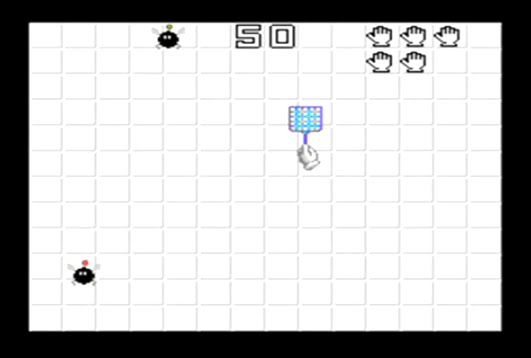
Man, I loved this game when I was a kid. Today? Not so much. It was Nintendo's sad attempt at making a collection of “computer games” for the SNES, complete with its own mouse accessory. The game featured an art program, a music program, a make-your-own comic book and more! Though nice for its time, time has not been nice to it in return. The art program is so primitive, it makes Etch a Sketch look like Photoshop. The music program only allows you to create natural quarter notes, so anything “complicated” like sharps, flats and eight notes are way out of the question. So wait-wait-wait. How did this wrinkly old geezer of a game even manage to crack my list? Has nostalgia impaired my judgment? Is it just a “filler” to cap off my awkward list of forty-nine? Or is it simply one of those games I love to play on drugs? All answers are close, but it's actually secret option D: the fly-swatting mini-game. Buried under all the outdated modes is a mini-game so fun, it compensates for everything else – or at least serves as a nice distraction. You can find it by clicking that mysterious coffee mug icon on the menu bar. Now this game has survived the test of time. It's basically a first-person shooter, only instead of a cross-hair, you have a fly-swatter. Your goal is to defend a kitchen countertop from an army of insects. It's only three levels long, but the high difficulty and Arcadian addictivitis will keep you up all night trying to beat it. I got wicked good at it, especially after I turned up the mouse speed to the max and got a little buzzed myself.


#49: Wild Guns
1994/95

The Good, The Bad and the Robotic collide in this steampunk, western shoot-em-up. I don't generally care for shumps, but even I loved this one. You and a friend can play as “Clint” (modeled after Clint Eastwood's iconic rolls in Sergio Leone's spaghetti western films) and/or “Annie” (based on real-life bankrobber Annie Oakley). And trust me, you have to play this with a friend. Not only because of the brutal difficulty; it's the best co-op action game since Contra. In fact, the game is very similar to Contra's pseudo-3D levels. It's a fixed third-person shooter in which you're confined to the foreground shooting at enemies in the background. The game has a classic western setting -- you know, saloons, deserts, speeding trains and the like, but the enemies are all futuristic: giant robots, cyborgs with jetpacks, and even the robotic cowboys from The Nightmare Before Christmas! There's never any explanation for why futuristic things are invading the 1800's, but who cares? Steampunk rocks. Never heard of it? Watch this. You start Wild Guns with only a machine gun and lasso, but you can also acquire a shotgun, grenade launcher and dynamite. You can dodge bullets Matrix-style, but real men will intercept them with a bullet of their own! The more incoming enemy bullets you intercept, the more that mysterious gauge fills at the bottom of the screen. Once it's full, you unleash the almighty VULCAN CANNON, which will make even the toughest enemy robots look like R.O.B. This game ain't no trolley ride. It'll whoop yer ass good, partner. But it's only six levels long, and the infinite continues keep the frustration from outweighing the fun. My only complaint: where are all the Indians? Perhaps they're the ones building all the evil robots.

#48: Star Fox:
1993

They may look like paper airplanes today, but when I was a kid, those Arwings were the sexiest things I had ever seen! And although the game's graphics are outdated today, the gameplay is not. In this classic rail shooter, you’re Fox McCloud, a mercenary fighter pilot hired to save the animal galaxy from the evil Andross (a total Dr. Zaius wanabe). This means flying across the galaxy, planet to planet, and blowing up everything along the way. Nintendo installed Super FX chips into all the Star Fox cartridges to allow for the game's enchanced, 3D graphics, which were not only way ahead of their time, but they still have a unique charm today. With multiple routes to chose from, a nice mix of space and surface missions, great boss battles and a kickass soundtrack, this dogfighter made me wanna join in the air force… until I grew up and found out you can’t really fly a jet into outer space. The only reason this game ranked so low is because it was practically eclipsed by superior sequels. But we'll get into those later (maybe even within this countdown). Like many of Nintendo's series, the original Star Fox feels a bit like a rough draft compared to its sequels. I would argue that that Zelda III and Metroid III totally replaced their predecessors. However, the original Star Fox still holds up surprisingly well, and it has some great stuff you won't see anywhere else in the series, like some wonderful techno music and trippy cut-scenes. Another thing I prefer in this version was Slippy, who was much cooler here than he ever was in, say, Star Fox 64. Apparently this was before he got the sex-change. This is also one of my favorite games to play while intoxicated. All those colorful, moving shapes are absolutely mind-blowing, especially in the level Space Armada. “Whoa, duuuude. Check out those gnarly polygons!”


#47: Pilotwings
1990/91

Pilotwings will make you repeatedly glance down at your controller to prove you're not playing an N64 game. The 3D effects are that good. In fact, I think this is a far better game than Pilotwings 64. It's a flight sim where you play as a young pilot trying to earn your flying license. To do so, you must pass a variety of aeronautical tests. You learn how to fly a plane, a hang glider, a jetpack and even go skydiving. The game is pretty tough but never overwhelming because your instructors give you a lot of leeway. See, every lesson is graded out of 100 points, but each stage of the game only requires you to score a designated total between all of the lessons. For example, one stage of the game requires you to score 220 points between three different lessons, meaning you can totally bomb the biplane lesson and still pass the class if you score high enough on the skydiving and jetpack lessons. And if you're slick enough to land on the moving platforms in any of the tests, you're treated to goofy bonus rounds where you can earn extra points as an angel bouncing on trampolines or a skydiving penguin. The best part of the game comes when you finally earn your gold license: you’re suddenly called into battle with a heavily-armed helicopter in an illegal rescue mission. Pilotwings was one of the very first titles on the SNES, yet I think it had some of the most advanced graphics and gameplay the system has to offer.


#46: Zombies Ate My Neighbors
1993

Apocalypse! The world is being invaded by every classic Hollywood horror monster: vampires, werewolves, martians, mad scientists, black lagoon creatures, mummies, Frankenstein's monsters, possessed dolls, chainsaw maniacs, and of course, zombies. You play as a ballsy young punk named Zeke wearing 50's-style 3D glasses who decides to save his neighborhood from the ghouls with an array of quirky weapons: squirt-guns filled with holy water, Popsicles, weed-whackers, shook-up pop cans that explode on impact, silverware, crucifixes and bazookas from fallen army-men. This game is a a scream! It's like playing through a cheesy old B-movie complete with a zany theremin soundtrack and a Twilight Zone-esque title screen. Zombies was also one of many great of examples of a game that was released on both the SNES and the Sega Genesis, and whose former version was vastly superior to the latter. In the SNES version, you can toggle a radar on and off to indicate the remaining neighbor's locations throughout the level. In the Genesis version, however, the radar is always on, and it not only hogs one-third of the screen, it hogs the right edge, meaning, if there's an enemy to your right, you're not gonna know about it until it's too late. But that's just the beginning. Get this: the SNES controller had four face buttons, which was perfect for a game like Zombies. B toggled weapons; Y fired the weapon. A toggled items; X used the item. The Sega controller, on the other hand, only had three face buttons, which proved disastrous: A fired the weapon, B also fired the weapon for some reason and C used the item. To swap weapons, you have to press A and B simultaneously, which often resulted in a weapon misfire. But worst of all, you can NOT toggle items in the Sega version!!! I can't even begin to express how much this ruins the game. Just imagine you reach a locked door in a level. To unlock it, you need to have a key selected in your item display. So, if you happen to have your first aid kits selected instead, you'll have to waste every one of them just to gain access to the damned key. And heaven forbid you have a key selected when there aren't any locked doors left in the level, as that prohibits you from using first aid kits. I hate Sonic and I hate Sega. No wonder the SNES won the 16-bit wars.

#45: F-Zero
1990/91

If you can read this, it's definitely not a bumper sticker on an F-Zero hovercraft. This is one of the fastest frickin' racing games you'll ever play. I gotta admit, F-Zero is an awesome game but an awful title. It sounds like the worst grade you could possibly receive on a homework assignment. On the contrary, I'd give this game an A-95. It was the first great racing game, and it's still one of the best. It was also the other launch title on the SNES (along with Super Mario World). Mode 7 gave the game its groundbreaking 3D capabilities (later seen in Star Fox and Pilotwings), and despite how incredibly fast the game is, both the graphics are controls are smooth as silk. There are four different hovercrafts, fifteen tracks and four difficulty levels, giving the game plenty of replay value. I particularly like how you can see each crafts' stats on the selection screen. The four racers are very well-designed. The two with high acceleration have lower top speeds, and the ones with low acceleration have higher top speeds. Therefor, the Blue Falcon is great for beginners. The Golden Fox and Wild Goose are harder to use, but once mastered, are even better. And the Fire Stingray is always the best, but only in the hands of a pro like myself. Every lap you complete awards you with a mushroom, er, I mean, a power-boost. Other than that, there aren't any weapons like in Mario Kart, but you can damage other racers by crashing into them, or repair your own racer by flying over power-beams in the pit areas. The fast, techno soundtrack fits the futuristic theme perfectly. But this game has one major flaw: it suffers from a mysterious lack of multi-player.

#44: Super Castlevania IV
1991

All the great NES franchises got an even greater reboot on the SNES. Castlevania IV was so great, they even put a “Super” in front of it – a title it definitely deserves. The Drac is back and it's up to the next descendant of the Belmont family to stop him. Simon Belmont returns with his trusty whip, and this time, he's got some new moves. In addition to whipping in any of eight directions, you can now swing the whip around freely (like Sheik’s over+B in Melee), hold it upright to shield projectiles, or even pull an Indiana Jones and use it as a grappling hook. All the old secondary weapons are back, too: throwing knives, axes, and the amazing crucifix-ninja-star-boomerangs! Castlevanias always excelled in creating a horror-style atmosphere, but Castle IV just took everything to a whole new level. The series had always been set in medieval Transylvania, but Castle IV was so dark, it made the earlier games look like Kirby games. The soundtracks were always a mix of dark, dissonant classical and heavy death metal, but Castle IV's soundtrack is so hardcore, it made the earlier scores sound like boybands. The boss battles are so hard, they made the earlier bosses feel like goombas. This game is so gothic, it makes the earlier games look like a bunch of emo posers. There are even some Mode 7 effects, like a cylindrical background that rotates around you like you're in a haunted funhouse. This game kicks ass! Mainly your own, though. That seemed to be a common theme in the first tier of my countdown: difficult games, which means you really have to be in the mood for a good challenge to play them. But he who hath the balls shan't be disappointed!

#43: SimCity
1991

Perhaps the most original game ever made for its time, SimCity had no hero, no villains and no princess. It was the revolutionary building-simulation game that cast you as the mayor of a new city that you get to build from the ground up. It was originally a computer game in 1989, which would normally disqualify it for this list. However, the SNES “port” is actually a remake featuring many significant improvements including “gift” buildings (police headquarters, casinos, amusement parks), the ability to create disasters (tornadoes, plane crashes, Bowser), city classifications based on your population (town, city, capital) and a helpful hint-giver named after the game’s creator, Dr. Wright. Houses, buildings, factories, airports, stadiums, parks, roads, railroads... you get to build them all wherever you want, and how you place them in relation to each other will affect your population. The more people you attract, the more your city will upgrade. The game’s poignant soundtrack upgrades along with your city. It begins as a quiet, peaceful tune -- perfect for a small, rural town. Then as your city becomes more urbanized, the same song gets busier and heavier. It's all variations on the same theme, but by the time you get a Metropolis, you won’t even recognize the song anymore. You can also check your ratings, demographics and even change taxes. The only flaw with this game is that it starts you off with so little money that it's not even fun. You'll go broke in no time with only a small corner of your map colonized. But if you use the popular “million dollar cheat,” you'll have more than enough money to cover the entire map, which is how the game’s default should have been. Back when I was a kid, I tricked my little sister into thinking that your city continued to grow and shrink even while the game was off. That way, after she fell asleep, I could open her file and set Bowser loose on her city. The following day, she'd turn the game on to find her precious city reduced to rubble, and I'd say “there must have been a tornado.” I never confessed the truth to her until just now. Sorry, sis.

#42: Final Fantasy V
1992/1999

FFV wasn't originally released in the U.S., because at the time, it was considered far too difficult for us dimwitted American gamers. Thanks, Japan. For years, this game was only available on the Super Famicom (Japan's SNES), until finally, seven years later, it got a translated port on the PlayStation collection, Final Fantasy Anthology. I thought, surely the game can't be that complicated. I was wrong. FFV boasted a complex job system, a deep battle system and insanely hard boss battles. Like FFIII, you get four characters, each of whom you can change into any job class at any time, and each can borrow one special ability from another class. This gives you an endless amount of freedom for customization, a feature later seen in Final Fantasy Tactics. You can create anything from a “knight” with “white magic” (a.k.a. Paladin) to a “white mage” with “back attack” (a.k.a. Pope). There are twenty-two job classes, almost all of which I found useful sooner or later. My favorites were Hunter, expert archers that, once mastered, could fire four fast attacks in a single turn, Blue Mages, who could learn enemy skills once cast upon them, and the Trainer, which lets you take control over enemy monsters – which, by the way, is the only way to cast some of the best enemy skills on a fellow blue mage. The tricky boss battles often require some trial and error. You need to learn those bossy bastards by heart before devising a way to defeat them. For example, one of the hardest battle in the game pitted you against four crystals that would unleash MASSIVE damage to your entire party... but only after you've depleted over half their hit points. SPOILER: The trick I finally came up with to beating them involved turning all four of my characters to Summoners, turning the battle speed way down in the configuration menu, setting the cursor to memory, carefully depleting just under half of the crystals’ hit points, waiting until all four of my characters’ ATB gauges were full, then holding the confirm button down as if my life depended on it to quickly unleash four fast Titan summons in succession, destroying the crystals before they even got a chance to fight back. Sound too complex for you? Go play your Madden games, dimwits.

#41: Live a Live
1994/2001 (unofficial translation)

Of all the RPG's that were never released in the U.S. (and believe me, I've played them all), this was the crown jewel. The only way to play it today is learn Japanese and purchase a Super Famicom along with the Japanese version of the game and a compatible TV to play it on. Or... you could simply download an SNES emulator and an unofficial fan-translated rom hack of the game. But don't tell 'em I sent ya, cuz emulation is kind of illegal. The opening screen of Live a Live presents you with seven chapters. Each follow a different character through a different time period. One by one, you must complete each of these chapters in the order of your choosing:

A) In feudal Japan, a ninja must infiltrate an enemy castle and assassinate its lord. You can choose whether to be stealthy and avoid all the battles or simply slaughter everyone in sight. If you take the kill-everyone approach, the game tallies the body count, and only by slaying all one hundred of the residents can you earn a powerful katana. But the stealthy approach is far more fun, especially since you start with an invisibility cloak which you can use anytime outside of battle.

B) In ancient China, an aging martial arts master must find a disciple to pass on his family's secret techniques. You get to choose which of three younguns to train as your disciple. Who and how you train them becomes of utmost importance at the chapter's climax.

C) In the far future, you play as a robot aboard a spaceship returning to Earth with a mysterious new lifeform aboard. It bears so many similarities to the film Alien, I can't believe the game didn't start a lawsuit. This one's an effin' horror game! Once the creature gets loose on the ship, the game becomes terrifying, as you must sneak through the ship without getting caught by the beast, which could be lurking right around any corner.

D) In the modern day, a martial artist enters a fighting tournament. It's like Mega Man, RPG-style. You fight six battles in the order of your choosing, and you learn your opponent's special moves as you defeat them.

E) In the old west, a cowboy joins forces with an old rival in order to protect a town from a horde of bandits who got their hands on a fancy new weapon called the gattling gun. Before the clock reaches high noon, you must gather supplies and prepare traps for the bandits, like explosives and ambushes. Oh, and restorative items include cigars, tequila and bourbon.

F) In the prehistoric age, a caveman fights for survival against a rival clan and carnivorous dinosaurs. This one's interesting in that it has no dialogue (as it's set before the advent of language). You also have a heightened sense of smell that allows you to sense things invisible to the player, a cool feature I'm surprised you don't see more often in games.

G) In the near future, a teenage punk with psychic powers must defend his city from a gang of streetpunks and a corrupt corporate entity. In addition to speaking to people normally, you can also read their minds to learn important secrets or hear some dirty comic relief.

After completing each of the seven seemingly-unrelated stories, you unlock the final final two chapters, which tie them all together in a powerful, totally unpredictable way. Oersted may very well be my favorite videogame villain of all time. You get to make a big decision toward the end of the game, which leads to two different endings. The game's battle system is as unique as the story. Battles play out on a grid-based arena, kind of like a simplified version of Final Fantasy Tactics. You have a guaranteed chance of running from random battles (which was especially helpful in that damned prehistoric chapter), and after every battle, your characters all get a full-cure! I can't believe Live a Live wasn't released outside of Japan, as it has some terrific production values. In fact, I think the story and characterization is so good, I would love to see it remade today with fancy cutscenes and talented voice actors. That's right, I dig modern games, too. Most of the time I'm just overcompensating to get younguns into the oldies.


And my SNES is just getting warmed up. Here's Part 2.